
Garden Glimpses: July Jamboree
For all its heat, humidity, endless days and toasty nights, Floral Summer doesn’t last all that long, nothing like the three-month span we ascribe to the summer season. In June, most plants are still ramping up, not yet in bloom; and by August, things are definitely on the wane. So it’s just July that showcases the floral fireworks we associate with summer, and that’s all too fleeting.
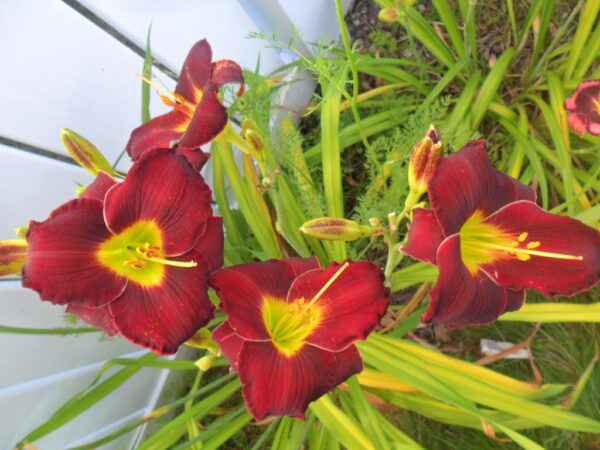

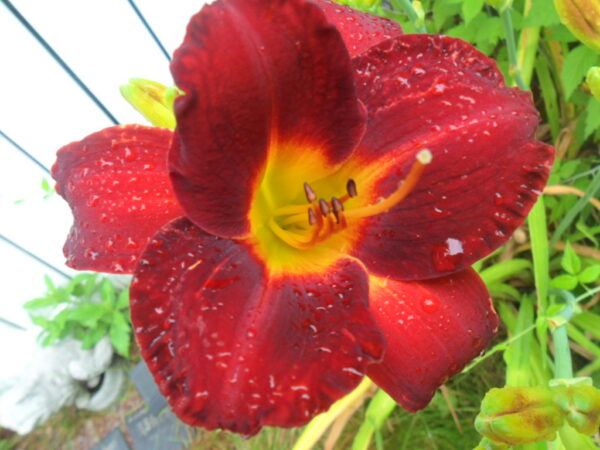
But while it lasts, summer in the garden is a joy to behold. A riot of color and form, July’s blooms offer arresting vistas and stunning closeups, a virtual kaleidoscope of floral beauty.
2026 has been an odd year, and an “off” one, characterized by a bitter, harsh winter that created much loss and many setbacks, a dry spring that has kept yours truly hopping with hose and watering can since mid-May, and uninvited fauna guests that have made further depredations among the floral residents. Gardening has always been an “up and down” proposition, at the mercy of wind, water, weather and circumstance, but this year has had decidedly more on the “downside” of the ledger.


That said, there is beauty everywhere in the garden, if you know where to look.
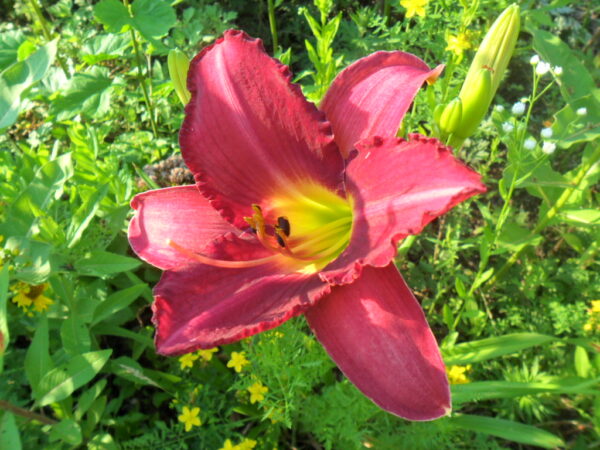
As always, it’s the daylilies that are the stars of July, bright beacons of color that draw the eye and ease the soul. Things got off to slow start, with Collier, typically the first daylily to bloom, not opening until the last week of June, when often it premieres two to three weeks earlier.

But the species made up for lost time fast, with a dozen varieties unfurling their first buds in the first four days of July. As their name implies, daylily blossoms last for but a day, and I eagerly anticipate my early morning midsummer ritual, perambulating through the garden as the sun rises, snapping off the prior day’s spent blooms to beautify the plant for the new day’s offerings, watching the mosaic of color unfold. It’s the best part of my day!


As each variety successively opens, they are marked on my calendar – Vintage Bordeaux, Buttered Popcorn, Little Rainbow, Mokan Delight, Chesapeake Crab Legs, Storm Shelter, Ruby Spider, Chicago Silver and Exotic Love are among the earliest.

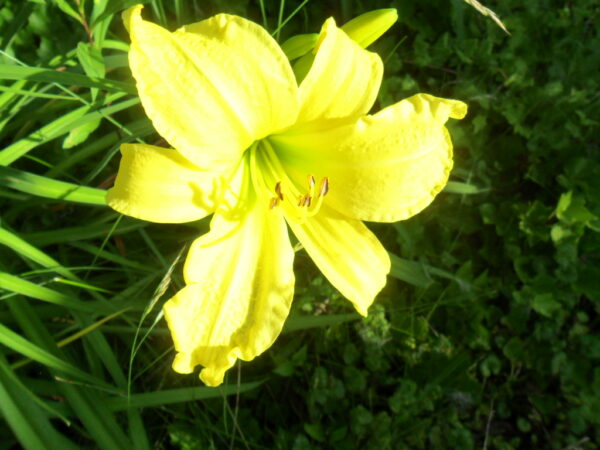
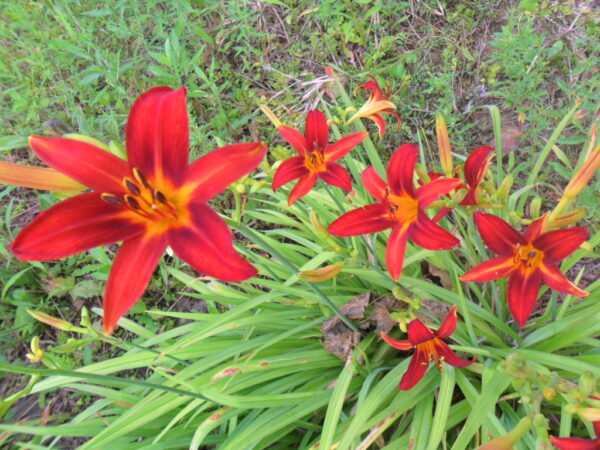
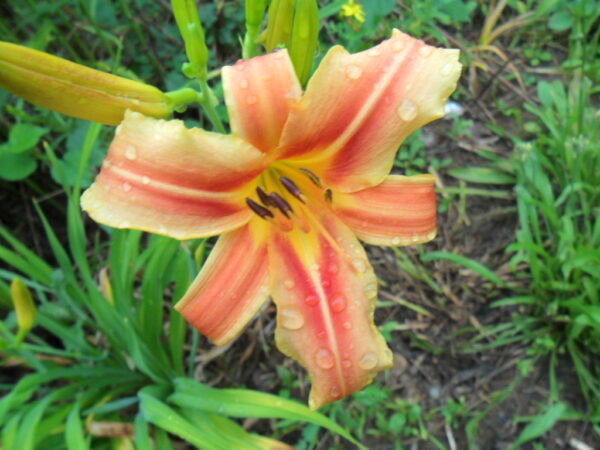
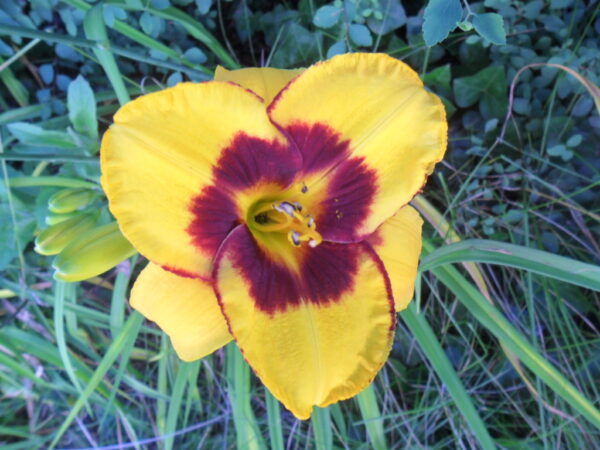
Amidst the quirky nomenclature, some of which are very aptly applied (such as Chesapeake Crab Legs, which looks like nothing so much as a plate of steamed Maryland crustaceans) I have six which I cannot identify. Three are heirloom plants from my parents’ day, saved from the wreck of their wildflower and perennial garden when a sandmound was installed in 2010, but whose names, if ever known, have long been forgotten. One, a deep red-orange with yellow throat, which we used to call “fire lily” for its coloring, I have tentatively identified as Sammy Russell, but truly, there are so many similar daylilies I can’t be at all certain. The other two, an attractive bicolor yellow-and-maroon, and a medium yellow, will likely never be known.
The other three anonymous lilies are on me – I bought a pack of six mixed daylilies three years ago, cut down to half-price late in the season. Too late for bloom that year, and knowing they’d get lost in the burgeoning weeds if I planted them out immediately, I potted them up, for easier care and watering until the fall planting season arrived. I dutifully labeled each, but didn’t think to use a waterproof pen, and by the end of the season, the labels were illegible.
Even with these precautions, I lost three of the six before fall, but we planted out the others in a nice sunny triangle that needed more oomph. Well, it’s been a long road, with my newest daylily babies struggling to hold their own, but no blooms were produced. Until this year. One of the three has finally favored me with a single scape, sporting half a dozen buds.

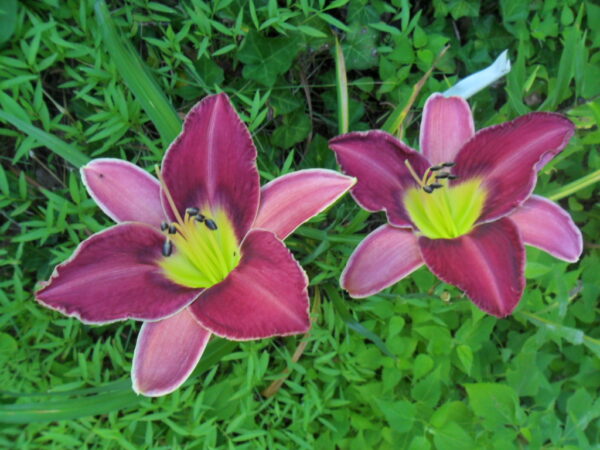
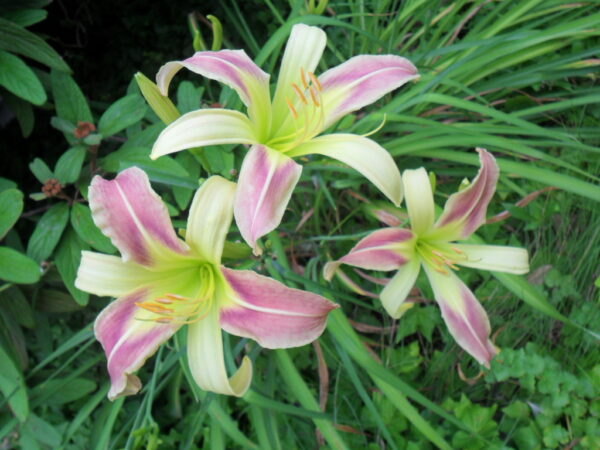
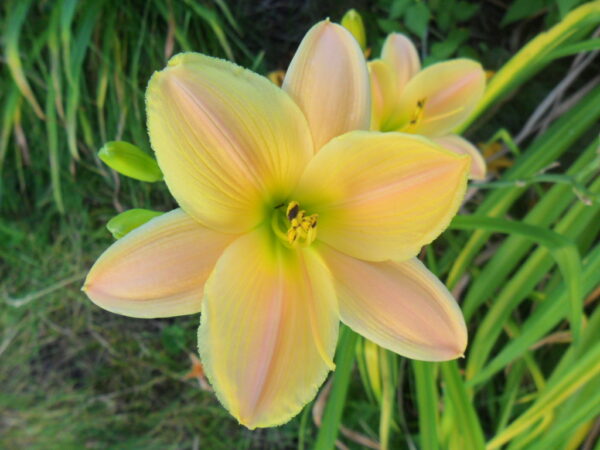
I eagerly awaited the Grand Opening, which came in early July. Unknown #1, as I have termed her, is a pleasing mellow cream-yellow with mixed tepals, comprised of three plain flat-edged sepals on the outside, and three inner petals that are ruffled and edged in dusky rose-violet, with matching eyes and a brilliant chartreuse throat, studded with striking coal-black anthers.

I snapped a shot, and did a Google images search, but my quest is hopeless – there are any number it could be. “Mysterious Eyes” seems a likely candidate, but it could just as easily be “Blue Beetle” or “Tapestry of Spells,” and “Lavender Showstopper,” “Paradise City,” or “Druid’s Chant” are not out of the question. So my latest bloomer will remain incognito, and likely so will her two sisters, should they ever deign to offer me blossoms.

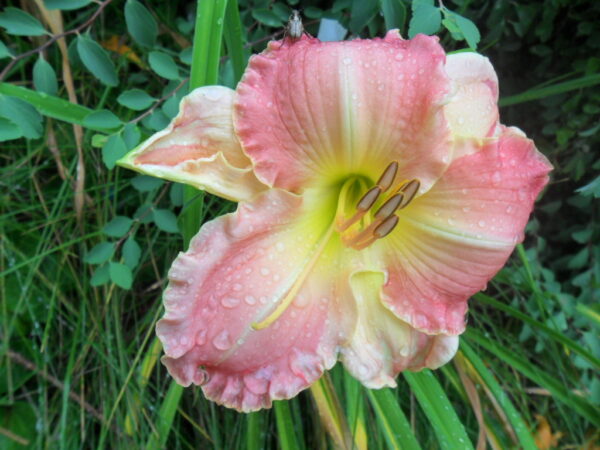

As with so much, it has been an odd, and perplexing, year for daylily performance. Those in the east bed markedly underperformed, while those in the west bed have largely thrived, with more scapes than ever (with notable exceptions). I see no reason for the widely disparate results, but have scouted out suitable new homes for the chronic underperformers, in hopes it may be a case of “location, location, location” and they’ll do better elsewhere. These I’ll shift in the fall.


Of course, it’s not all about daylilies! Hydrangeas are another glory of the summer, but again, harsh winter conditions have set things back somewhat. The loss actually began last year, when in September my sweet little Pee Wee wilted away, almost overnight. At first, I assumed this was drought-related, but repeat waterings had no effect, and upon further inspection, I espied a hole dug at the very base of the plant, and realized the visible parts had been separated from the roots by an unseen tooth.


I suspect Vinnie the Vole in this matter, an ill-mannered mammal of the order Rodentia who has haunted my nightmares since moving here. Vinnie (or perhaps his descendants) have been responsible for quite a bit of destruction in the garden, but Pee Wee was their largest quarry yet, if indeed they were her downfall.
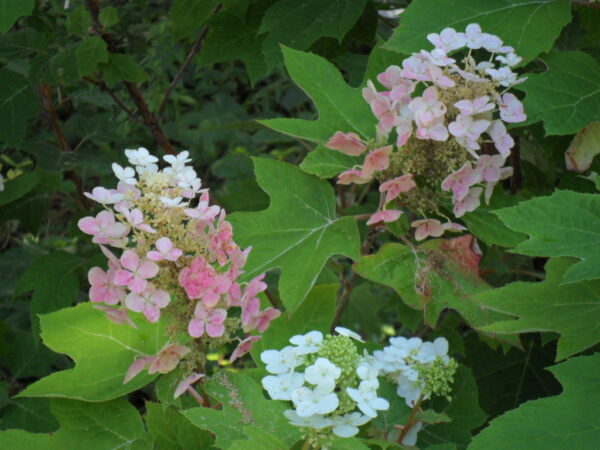
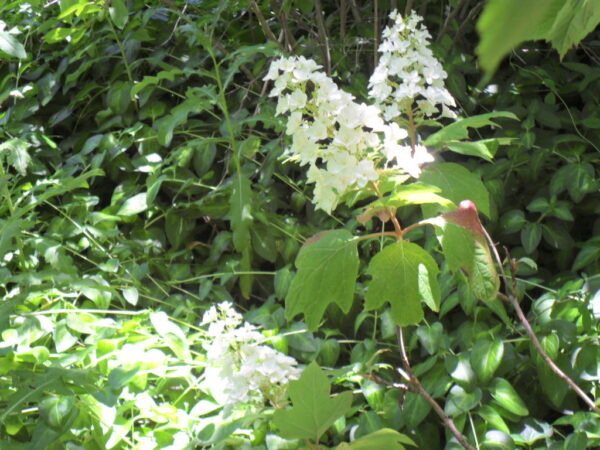
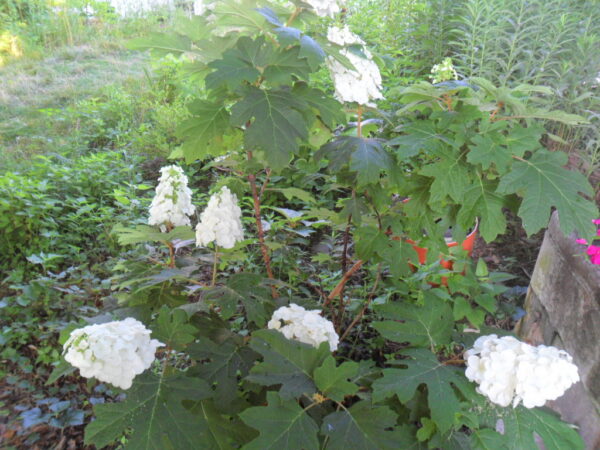
So I started the year down one oakleaf hydrangea, and of the remaining three, two give cause for concern. Snowflake, a near neighbor of Pee Wee, should be fully leafed and covered in foot-long blossoms, but this year, sports only a few small leaves amidst several dead branches, and flowers that aren’t half the size they should be. And my beloved Alice is diminished as well, though as the season rolls on, more of her leaves are growing to their typical dinnerplate size, even if she’s still looking rather leggy, and somewhat under-budded.

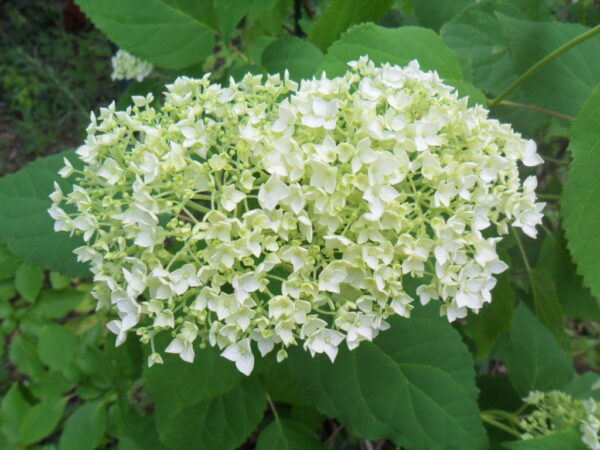
Only Queen of Hearts has thrived, with normal foliage and the best showing yet of her densely-packed flowers, a bumper crop of a baker’s dozen. Annabelle, my sole arborescens hydrangea, also took a beating, and is less than half her size from last year, though she is still heavily budded and the blooms are as lovely as ever. Arborescens hydrangeas have the advantage of blooming on new wood (as opposed to oakleaf varieties, which bloom on the prior year’s growth), so I can give her a reinvigorating dramatic pruning this fall, trimming her down to the base, and allowing her to reinvent herself, literally from the ground up, next year, without sacrificing any flowers.

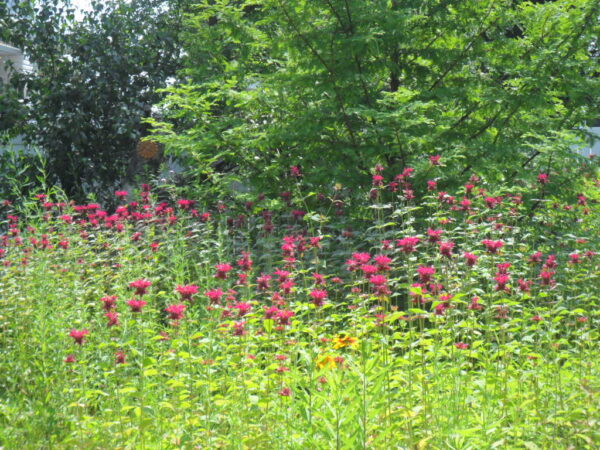
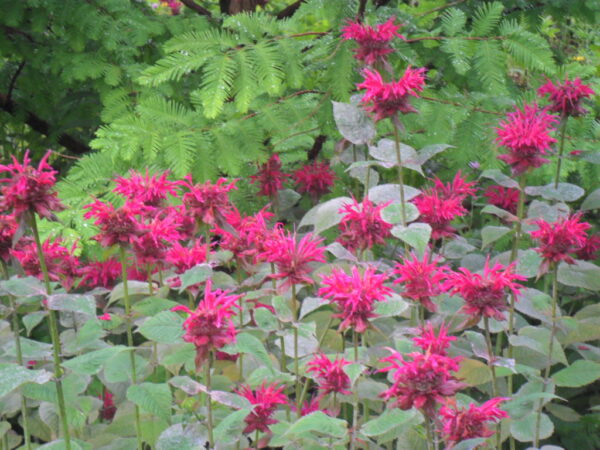
Of the long-blooming herbaceous perennials, echinacea and bee balm have done best, with honorable mention due to rudbeckia and heliopsis. The bee balm is especially lovely and fulsome this year. What began in 2020 as three small plugs of magenta bee balm transplanted from my West Philly garden, has swelled to a trio of immense drifts of the stuff, eye-catching in the extreme. The drawback with bee bam is that it’s prone to mildew, and can become quite an eyesore after bloom. But the way mine are positioned, they are quickly covered by taller natives such as aster and goldenrod, somewhat screening the view. It requires a bit of editing to keep these prolific spreaders from invading the bee balm spaces themselves, thus crowding out the prized crop, but fortunately both natives yield readily to a good hand grasp, facilitating weeding.

I couldn’t be happier with the performance of the echinacea. Coneflowers, as they are commonly called, now come in a wide array of colors and styles, but in my experience, the more exotic varieties aren’t truly perennial, and need to be treated as annuals (though I have had some success with the white coneflower). The standard, reliable purple coneflower, a common wildflower in this area, does best.
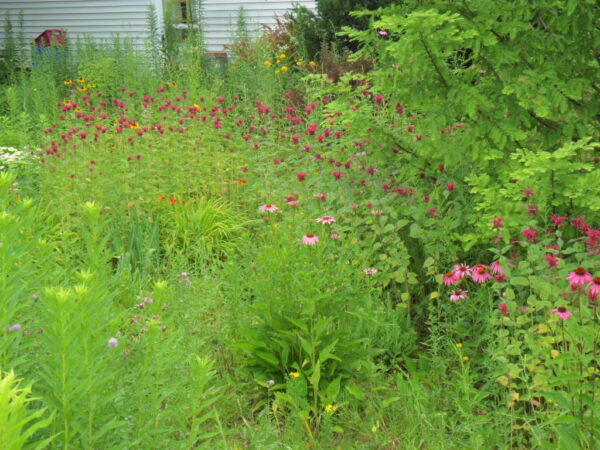
Though termed “purple,” the blooms are really more in the pink shades, and can vary from rather pale rose to brilliant burgundy. I’m fortunate in that my best proliferators have been in the deeper colors, and have roamed across the landscape to form colonies throughout, punctuated here and there with a white coneflower that came along for the ride. Coneflowers come with an added bonus – birds, especially goldfinches, dearly love the seedheads, which remains sturdy and erect long after the plant has died. For that reason, I don’t cut these back until late winter, affording an avian change of diet from the purchased birdseed. They even look attractive after a light snow, tipped with rounds of white.
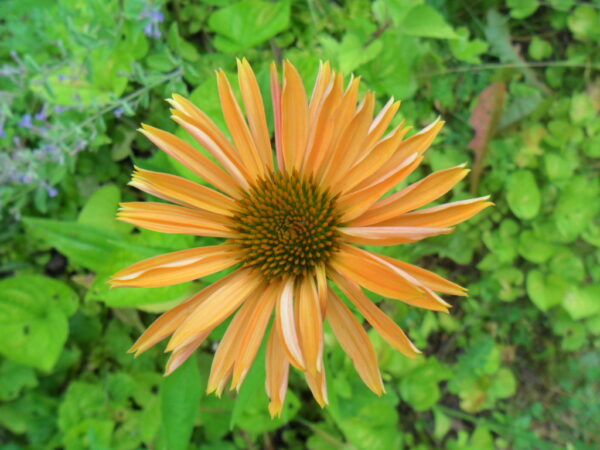

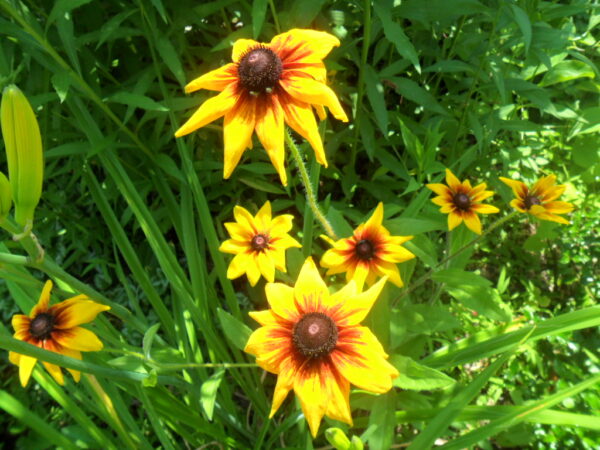
Rudbeckia (AKA “Brown-eyed Susan”) and Heliopsis (AKA “False Sunflower”) are also good spreaders, and between these three the sandmound meadow is finally becoming what I envisioned: a riotous mix of islands of color, almost seamlessly covering the space, interspersed with stands of native wildflowers.
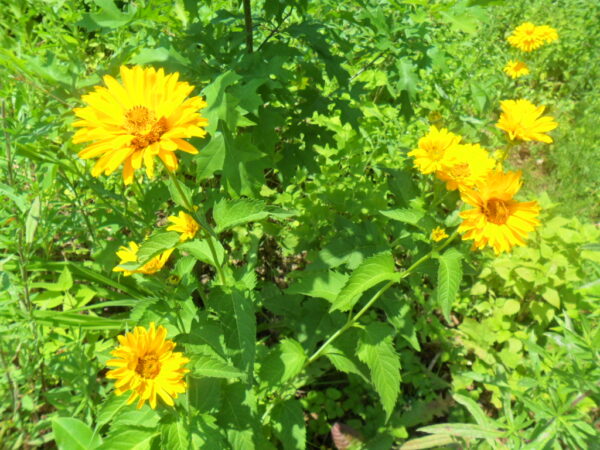
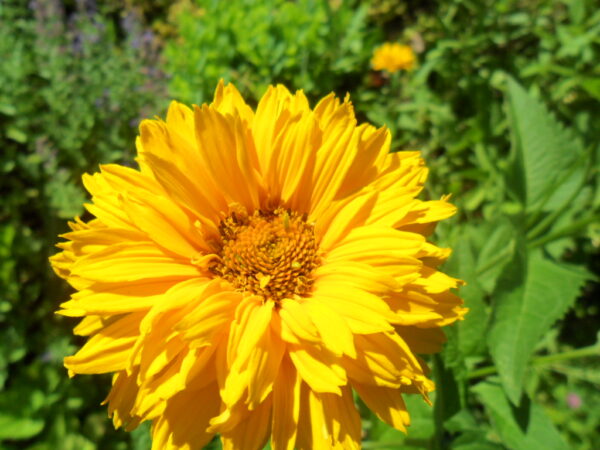
Or, it will be, once these smaller colonies expand. Heliopsis, a bright, sunny yellow-gold, opens earliest, starting in mid-June, whereas rudbeckia, a richer yellow dotted with chestnut brown centers, doesn’t really get going until later in July. While my plantings of these have prospered, this year I’m seeing more foliage than bud, a circumstance which I heartily hope isn’t going to become a trend. Both sport blossoms that are long-lasting, and cut heliopsis dries extremely well, often retaining near-fresh color for years until fading to dun-ochre.
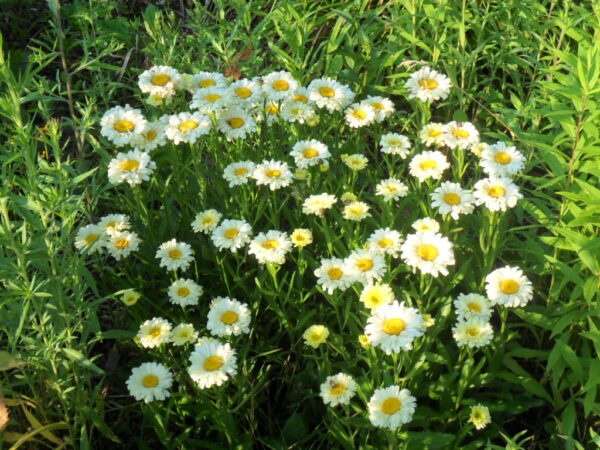
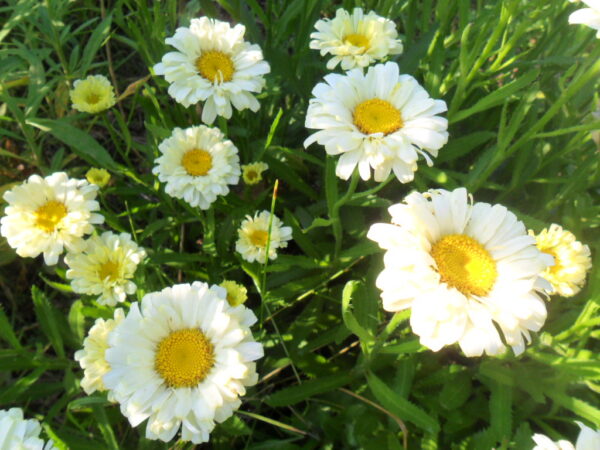
Shasta daisy is another popular midsummer bloomer, coming in several varieties. Mine tend toward the rounder-tipped, almost chrysanthemum-looking petals, though some are rather more pointed. I planted two clumps when I moved in, but one never really took, and is now extinguished. The other thrives, however, with masses of creamy white blossoms punctuated by green-gold centers.


Late July and early August is also the heyday of Asiatic lilies, which haven’t done particularly well for me. Sadly, Pink Giant, a lily considerably taller than me, with medium-pink flowers, and African Queen, a trumpet variety with purple-blushed amber blooms, have gone to that great perennial border in the sky. Remaining is Forever Susan, with its dramatic rich orange and purple-black blossoms, a rare June performer, and varieties such as Tiger Lily, orange with maroon spots, and Stargazer, a rich pink limned with white and freckled with brown, which come into their own as July passes. Bridging the gap between these is another unnamed variety, an Asiatic with deep pink flowers, that took three years to bloom, but now blossoms regularly, albeit it still has but one stalk. That’s just starting to open now, and with a bloom head of no less than ten buds, I’m looking forward to the show!

As these imported perennials fade into August, the heavy floral lifting is taken up by natives such as Queen Anne’s lace, goldenrod, white snakeroot and aster, which light up the last weeks of summer into autumn. And so the year rolls on…



6 comments, add yours.
Gael
Love the flowers! Thank you so much!
edna
Your garden posts are are among the year’s best highlights! Thank you!
Rosemary
What a beautiful garden of lilies, daisies, hydrangea’s, bee balm & more
in a color kaleidoscope of blossoms, each one prettier than the next.
Thank you Alex, for sharing the lovely photos!
Jane
What part of the country are you in?
Alex Miller
AuthorNazareth, PA
Laurien
I always enjoy your daylily photos so much! So sorry about Peewee and Pink Giant which I remember from past years. Would send over some cats to deal with Vinnie the Vole if we lived closer! Thanks Alex! Will look forward to your fall post!