
Garden Glimpses: Spring? What Spring?
No siree, Spring 2026 will not be one for the books! I suppose, for a gardener, anytime a plant’s performance isn’t quite up to snuff, there’s a bit of a let-down, knowing you’ll have to wait another year in hopes of improvement. But when the plants are spring-bloomers, heralding the return of life after a long, barren winter, the pill is a bitter one to swallow indeed.
By and large, with some exceptions, pretty much everything came up short this year, either reduced in size, bereft of bloom, or downright vanished, never to return. Which isn’t to say there wasn’t still wonderment and beauty to behold, but you really had to look for it! It feels like the spring garden (and in some instances, what I can foresee of summer) took a giant step backwards this year, and I’m not quite certain what to do about it.
Mainly, because I’m not clear on the cause.

It could have been the exceptionally harsh winter, with extended periods well below freezing, sometimes below zero. But bulb plants, which are buried deep and dormant at that stage, yet numbered among the worst performers of this season, aren’t usually bothered by such things over much. Besides, for much of that time, we had a superb foot-and-a-half-deep snowpack, which insulates and protects what it covers from the harshest cold and winds.

It could be the increasing drought, catching up with me. Precipitation patterns have altered considerably since I was a child on this property, at all seasons, and over time, that has a deleterious effect. We are rarely off the drought maps these days, sadly, even if we temporarily rate as low-level drought. Bulbs, though dormant through the worst of the summer drought, are not immune to this – they require a minimum level of hydration, which I am unable to provide for plants that can’t even be seen, given all the growing things I need to tend to in those months, and the limitations of my well.
Then again, it could be that some plants, which produced volumes of foliage but not a single bloom, may be reacting to too much shade, which starts earlier than ever with overall warming trends, limiting the ability of bulb plants sited under deciduous trees to take in the energy they require for the following year’s bloom, before the tress leaf out and shade them.
Lastly, could just be my Leo laziness. I’ve had tens of pounds of “bulb booster” fertilizer sitting on my laundry room shelves since I moved here in 2020, and although every year I say I’ll get out there and treat them right after blooming, I never have. This year I must, if only to cross that possibility for the culprit off my list. To be truthful, I didn’t really think it was necessary, since the heirloom daffodils, which have been here since I planted them forty years ago (as an anniversary gift for my parents), always perform well, and have never had any fertilizer support in all that time. Until this year, anyway. So I doubt an infusion of fertilizer will help, but it sure can’t hurt.
After that it’s another waiting game, until next spring. If the booster doesn’t boost, it’s time to consider moving them to a more congenial locale, away from shade and drier soils. If the realtor’s mantra is “location, location, location,” then the gardener’s guiding dictum must be “relocation, relocation, relocation.” It’s said it isn’t a real garden until everything’s been moved three times, and I may need to put that to the test.
But that would mean waiting on final results for at least two more years, and that’s not a happy thought.
And summer, what I can see of it this early on, is looking pretty grim as well. I had already lost four established hostas and an oakleaf hydrangea late last year, due to depredation by some unknown varmint(s). Now I can confirm additions to that list, likely from the extreme cold: a lovely variegated ivy patch, at least four daylilies, most of the American Beautyberry, a tubbed variegated boxwood, and a Star of Bethlehem. That last is the only bulb plant I can confirm is gone, but there are so many, it’s hard to be sure. (I even lost a line of tough-as-nails hedera helix (that’s ‘common ivy’ to you and me) that I had allowed to grow up and around the porch, wreathing the front door in pleasant ‘cozy cottage’ style.)


What I can say is that about 25% of the bulbs gave only foliage, another 25% gave meager bloom, and about 40% held their own or declined slightly. Maybe 10% (if I’m being generous) improved over last spring’s performance.


But that said, of course there are still glimmers of loveliness here and there. And you, lucky reader, get to enjoy those without the attendant heartbreak of seeing the lousy so-and-so’s that sat there and mocked me.
So let’s begin!


Winter held its grip as long as possible this year. By late January or early February, my witch hazel is typically in full bloom, snowdrops and snow crocus are up and doing, even the hellebores show signs of vigor. And I can expect my earliest daffodils by Valentine’s Day.

Not for 2026! Everything was a good 4-6 weeks behind, and then three bursts of extreme heat pushed them all through their cycles lickety-split. So that even what blooms I did get, didn’t last long. And the spring bulb season is now effectively over, a good three weeks early.

The out-of-season stretch of 80s in March and April pushed the spring ephemerals, but a sudden late freeze literally nipped them in the bud, so that an old established bleeding heart, primed with buds and about ready to open, was cut down overnight. I doubt it will kill the plant outright, but that’s it for 2026 bloom; add it to the ‘try again next year’ pile.

But I’m lapsing again into complaints and regrets. On with the show!
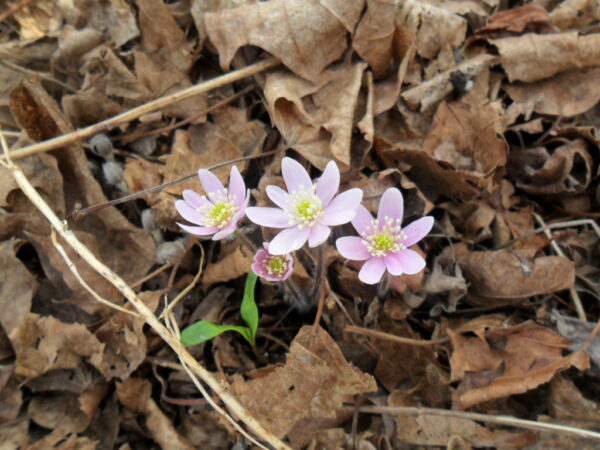

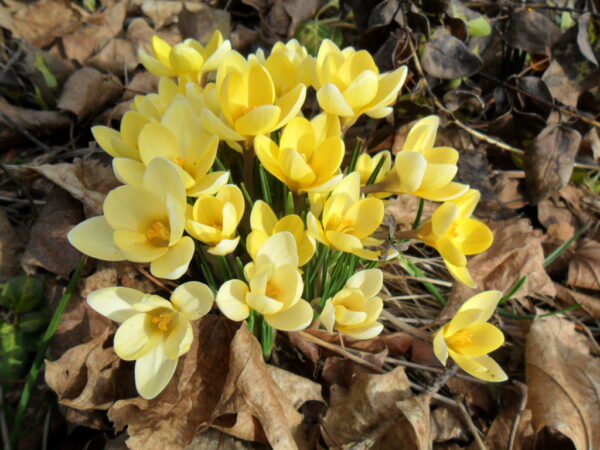
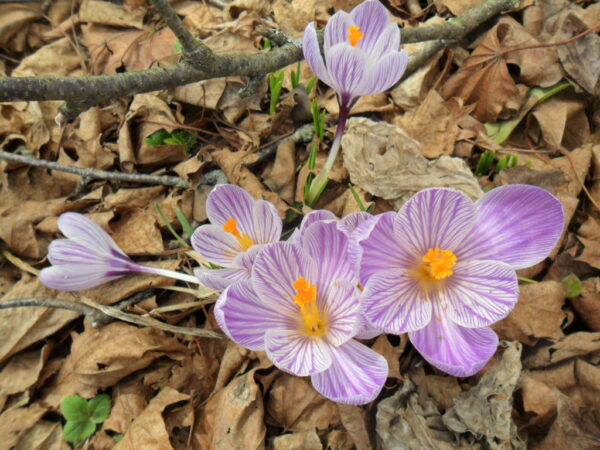
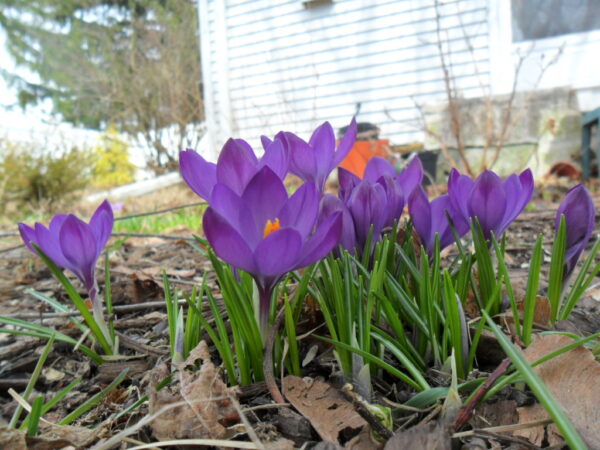
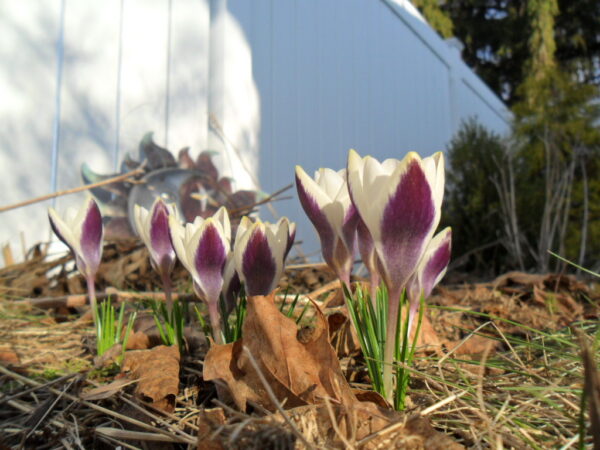
Any good photographer (or even me!) can find a workable frame for even the worst subjects, and what you’ll find interpolated in the text above, and filling the space below, are some of my favorite shots from the season. Like putting lipstick on a pig.
Enjoy!
Narcissus are (normally) the glory of my spring garden, with more than 50 varieties on display. This year, not so much, but here’s a sampling of those that did best:



One comment, add yours.
Laurien
Hi Alex, I’m so sorry that your garden is struggling. I do wonder if our strange weather patterns caused by climate change are to blame. But it also occurred to me your garden might be missing a cat to chase out those varmints! I still enjoyed the beautiful Panda and butter crocuses, hellebores, and yellow Pagoda dogtooth to name a few. Thanks for sharing! Here’s hoping next year’s spring is more typical and your blooms more abundant.