
“I Love Lucy” Turns 75
October 15, 1951 saw the premiere of one of the world’s most-beloved TV shows ever, when “I Love lucy” first took to the airwaves. Since that auspicious moment, seventy-five years ago, ILL has never been off the air! Syndicated globally, ILL reruns can still be found multiple times daily on various “nostalgia” cable channels, and available 24/7 on dedicated streaming platforms like Pluto TV. It never lacks an audience.
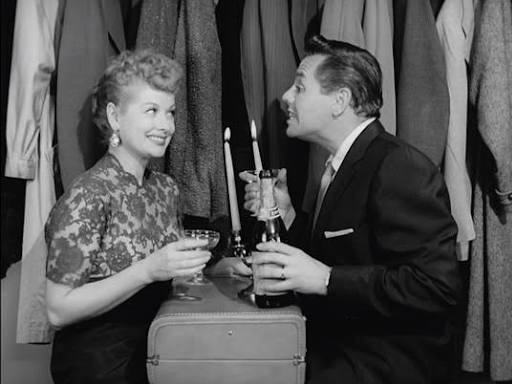
The brainchild of comedian/actress Lucille Ball and her musician husband Desi Arnaz, ILL is loosely based on their domestic lives, augmented and humorized for television, as spouses Lucy and Ricky Ricardo, a frustrated housewife who pines for the limelight of an acting career, and her bandleader husband who tries to prevent it. Ball was the show’s public focus, and became an icon of American comedy, but Arnaz was responsible for most of the behind-the-scenes innovations that made the show an instant classic, and propelled television into its next phase.
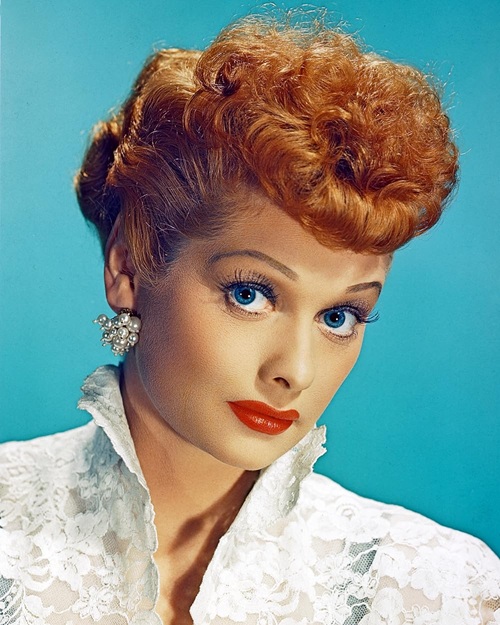
At the time, most TV was filmed with fuzzy live kinescope transmissions that weren’t preserved. Once and done, in the trash. Desi Arnaz insisted on shooting ILL with high-quality Hollywood film stock, leaving a record to which their portmanteau Desilu Productions retained the rights, and voila! Reruns and syndication were born!
Arnaz’ innovations didn’t stop with creating a future revenue stream. ILL revolutionized television production by pioneering the three-camera setup, instituting overhead flat lighting, and filming on 35mm film in front of a live studio audience.
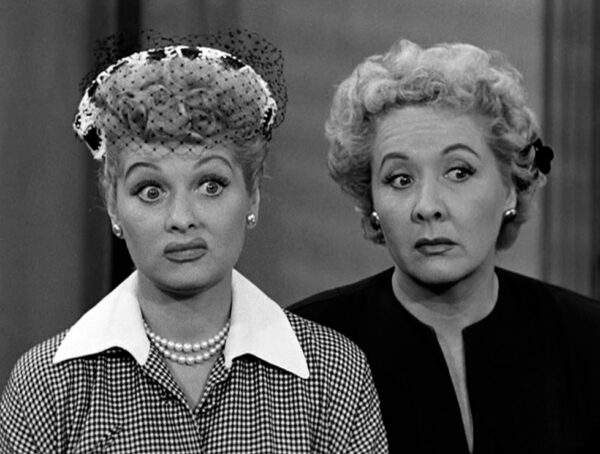
Director of photography Karl Freund used three cameras running simultaneously, with left, center and right angles, capturing continuous action like a stage play. In addition, Freund designed a high-intensity, shadowless overhead lighting grid that allowed cameras to pan and shoot from any angle without readjusting lights for different perspectives.
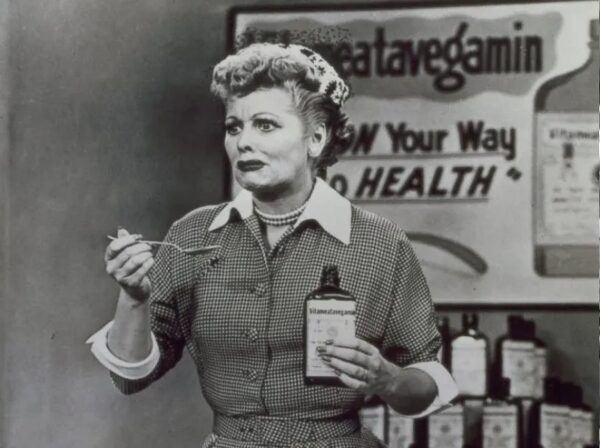
Performing in front of a real 300-person audience allowed actors to time their physical comedy and “hold for laughs” organically, matching audience energy and creating a synergistic product that essentially added the audience to the cast. (The longest continuous live audience laugh for the show came near its terminus, in 1957, in the episode “Lucy Does the Tango,” with 67 seconds of uninterrupted hilarity after Desi’s energetic dance rehearsal with Lucy crushes several dozen eggs she was concealing in her blouse, causing continual albumen leakage, while she affected normalcy; sadly, most rerun prints cut down their moment of glory to a few seconds, to allow for additional commercials.)

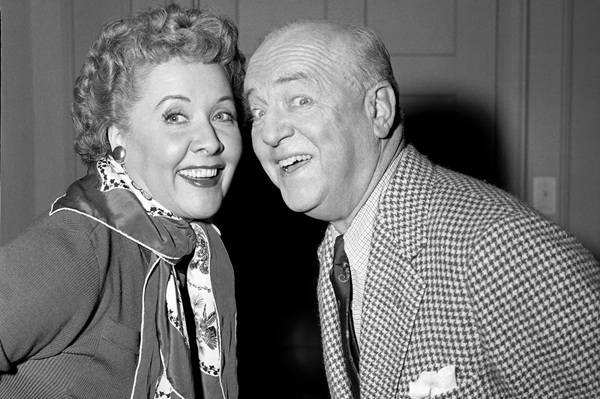
Lucy and Desi were joined by veteran actors William Frawley and Vivian Vance, as Fred and Ethel Mertz, their landlords and best friends, with Lucy and Ethel partners in crime in most of the shenanigans. The first season focused on domestic conflicts and Lucy’s attempts to break into show business, stymied by Ricky at every turn. A baby was added in Season Two, and incredibly, Lucille Ball gave birth to her real-life son, Desi Arnaz Jr, on the very day the episode aired in which her onscreen character did the same for Little Ricky. The show must go on!
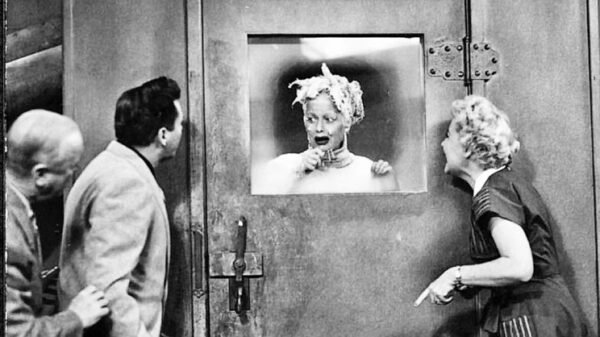
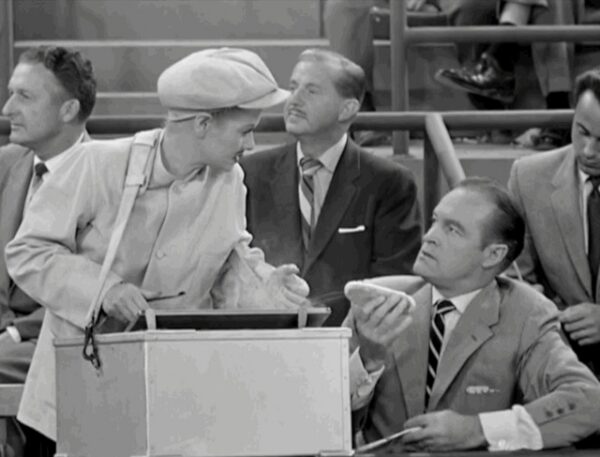
By Season Four, the domestic schtick was feeling a bit stale, so Ricky is given a movie contract and the gang packs their bags for Hollywood, enabling a continuous stream of guest appearances by current stars, playing themselves, many of whom Ball knew personally from her own film career, including John Wayne, Harpo Marx, William Holden and Cornel Wilde, plus a walk-on cameo by the reigning queen of Hollywood gossip, Hedda Hopper.

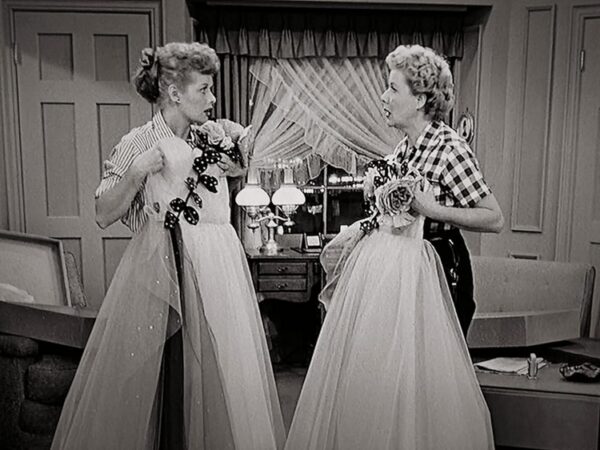
In Season Five, Ricky’s band is booked to play Europe, where Lucy struggles to meet the Queen, buy a designer Paris gown, gets them marooned in the Swiss Alps, and inveigles her way into Italian pictures. Season Six is punctuated with more high-profile guests such as Bob Hope and Orson Welles, until Lucy gets the itch to move to the country, and the sitcom is relocated from its cramped Manhattan apartment to a spacious house in suburban Westchester County.
Born 6 August 1911 at 5 PM EST in Jamestown NY (Rodden Rating AA), Lucille Ball’s 13 Leo Sun is conjoined by asteroid Hilaritas 996 at 6 Leo, named for the Roman goddess of rejoicing, cheerfulness and good humor, representing happiness and festive mirth, and the root of our word “hilarity.” Hilaritas’ exact square to Jupiter at 6 Scorpio augments the humor, and underscores Ball’s claim to fame (Jupiter) as her comedy (Hilaritas), after a moderately successful screen career where she failed to break out as a star.
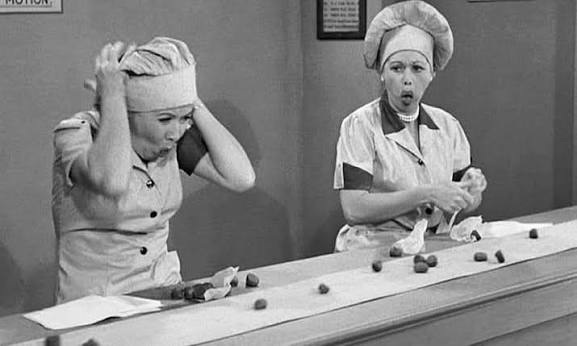
A square from the Sun to Mars at 14 Taurus suggests the brand of physical comedy which she perfected. Unlike most of her contemporaries, Ball was unafraid to show herself in a less than flattering light, or to contort herself for a laugh. Just shy of slapstick, many of her adventures involved physicality (and she was definitely not above taking a pie in the face). A square to Saturn at 19 Taurus alludes to the hard-nosed businesswoman behind the jester, the first woman to run a major production studio.
There is no asteroid Lucille, but asteroid Lucy 32605, the diminutive by which she became a mononymous household name, appears at 3 Libra, in semisquare to the Sun, squared the Moon at 7 Capricorn and the 1 Capricorn Ascendant, conforming neatly to the First Rule of PNA (Personal-Named Asteroid) placement, which is that asteroids representing the native will appear connected to at least one of these three, or Mercury (as ruling the naming function).
Known as America’s First Lady of Comedy and Queen of Comedy, Ball sported a trine from the Sun to asteroid America 916 at 14 Sagittarius, and a sesquiquadrate to asteroid Thalia 23 at 25 Pisces, named for the Greek Muse of Comedy, both embedded at station. As well, Ball came by her “Queen of Comedy” moniker honestly, with asteroid Regina 285, Latin for “queen,” also at station from 25 Pices, exactly conjunct Thalia. This, with the self-defining Hilaritas, makes comedy (Thalia) a prime element of her character, and offers a national stage (America) to display it.
Add to this asteroid Witt 2732, an alternate spelling of “wit,” the mental ability to use clever and amusing words, having a quick and sharp intelligence, which at 6 Cancer is Angular on the 1 Cancer Descendant and closely opposes the 7 Capricorn Moon, forming a T-Square with asteroid Lucy.
Husband and business partner Desi Arnaz shows as asteroid Desai 25426 (closest to Desi) at 26 Cancer, squared to asteroid Hera 103, named for the Roman goddess of marriage, at 20 Libra. A conjunction with Neptune at 22 Cancer depicts not only their onstage partnership, but unfortunately, also the deception practiced by Desi, a confirmed womanizer and faithless spouse.
When “I Love Lucy” premiered at 8 PM EST on 15 October 1951, transit asteroid Lucy at 6 Leo was an exact match for natal Hilaritas, while transit Thalia at 2 Libra conjoined natal asteroid Lucy at 3 Libra, doubling down on the comedic vibes. Transit Hilaritas at 19 Sagittarius conjoined the 17 Sagittarius Descendant and opposed transit asteroid Valentine 447 at 11 Gemini, on the Ascendant and embedded at station. Why Valentine? It’s the word perhaps most associated with “love,” as in “I Love Lucy”! Asteroid Lucy also forms a T-Square, opposing asteroid Desai at 10 Aquarius, with the Moon at 3 Taurus on the fulcrum, a vivid celestial rendering of the domestic (Moon) comedy based loosely on Lucy (Lucy) and Desi (Desai) themselves.
Transit asteroid Witt is exactly conjunct Jupiter at 7 Aries, enhancing the show’s cleverness and impelling its fame, while exactly opposing Saturn at 7 Libra, ensuring its longevity. Saturn’s conjunction with Thalia suggests a solid foundation (Saturn) in comedy (Thalia), and its conjunction with natal Lucy brought the forty-year-old Ball (Lucy) to the apotheosis of her career (Saturn). A T-Square is formed with transit asteroid America at 2 Capricorn, aligned with Ball’s Ascendant/Moon, reframing the show’s ability to transform Lucille Ball into a national icon (America).
ILL’s 21 Libra Sun conjoins Ball’s natal Midheaven at 27 Libra, ruling career, status, and reputation, as the vehicle that put her on the map. Also in tow, transit Mercury at 23 Libra and Neptune at 19 Libra, emphasizing the importance of good writing (Mercury), and reflecting the theatrical focus (Neptune) of the series’ plotline. In addition to Ricky’s showbiz career and Lucy’s aspirations, both Fred and Ethel are former stage performers and vaudevillians. And speaking of the sidekicks, Vivian Vance and William Frawley, asteroid Vivian 1623 at 22 Libra conjoins the Sun, while asteroid William 270373 at 8 Virgo is semisquare. The semisquare between William and Vivien also reflects their offstage tension, with Frawley sometimes bringing Vance to tears with his caustic comments.

Transit Venus at 9 Virgo exactly matches Ball’s natal Mercury, another allusion to the title (Mercury), with Venus ruling love. These square transit Valentine, while Ball’s natal Valentine at 14 Leo closely conjoins her Sun, making her ILL role self-defining for her.
Lucille Ball went on to star in two more Lucy-centered series, “The Lucy Show” (1962-1968) and “Here’s Lucy” (1968-1974), albeit her surname and backstory changed with each version. Vivian Vance also changed her character’s spots and came along as second banana in “The Lucy Show,” while Ball used her real-life kids Lucie and Desi Jr as her costars in “Here’s Lucy.”
Whether as Lucy Ricardo, Lucy Carmichael, or Lucy Carter, fans didn’t care – she was, simply, Lucy, and everybody loved her!
Title Image Credit: drawn by ChatGPT


One comment, add yours.
Laurien
I watched this show as a kid but learned so much more about it from your article. Thanks Alex!